DNS Security for File Sharing: DNSSEC, DoH, and Encrypted Client Hello Explained
— Written by Brendan, Founder of FileShot.io • 16 min read
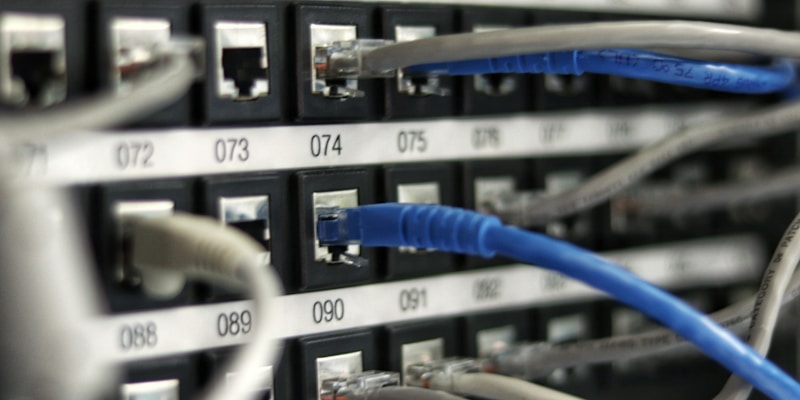
Every time you upload a file to a sharing platform, download a shared document, or click a link someone sent you, your device performs a DNS lookup before anything else happens. Before the TLS handshake, before the first byte of encrypted data flows, before any authentication check—your browser asks a DNS resolver to translate a human-readable domain name like fileshot.io into an IP address. That DNS query, and the response it receives, is the foundation that everything else depends on. If that foundation is compromised, nothing built on top of it can be trusted.
DNS was designed in 1983 as a plaintext, unauthenticated protocol. It has no built-in mechanism to verify that the response you receive actually came from the authoritative server for that domain. It sends your queries in the clear, visible to every network device between you and the resolver. And it reveals the exact domain you’re connecting to, even when the subsequent connection is encrypted with TLS. For file sharing platforms that handle sensitive documents, this forty-year-old protocol represents a critical attack surface that most users never think about.
In this guide, we dissect the DNS-level threats that target file sharing users, explain the modern protocols designed to defend against them—DNSSEC, DNS over HTTPS, DNS over TLS, and Encrypted Client Hello—and show you how to configure your setup so that your file sharing activity remains private from the moment you type a URL to the moment the last byte is delivered.
DNS: The Phonebook of the Internet and Its Role in File Sharing
The Domain Name System functions as the internet’s distributed directory service, mapping human-readable names to machine-routable IP addresses. When you navigate to a file sharing service, your browser initiates a recursive DNS query that traverses a hierarchy of servers: the root servers (managed by 12 organizations worldwide), the top-level domain (TLD) servers (like those for .io), and finally the authoritative nameservers for the specific domain.
For file sharing, DNS plays a role that extends far beyond simple name resolution. A typical file sharing workflow involves multiple DNS-dependent steps: resolving the main application domain, resolving CDN endpoints that serve the client-side JavaScript (including encryption libraries), resolving API endpoints used for upload/download operations, resolving authentication service domains, and resolving analytics or telemetry endpoints. Each of these resolutions is a potential point of interception.
The critical insight is that DNS operates on a trust-on-first-use model. Your device trusts whatever DNS resolver it’s configured to use—typically assigned automatically by your ISP via DHCP. That resolver, in turn, trusts the responses it receives from upstream servers. At no point in traditional DNS does anyone cryptographically verify that a response is authentic. This is the fundamental vulnerability that every DNS attack exploits.
DNS Hijacking: Redirecting File Sharing Domains to Malicious Servers
DNS hijacking occurs when an attacker manipulates DNS responses to redirect a legitimate domain to an IP address they control. For file sharing platforms, this is devastating. An attacker who successfully hijacks the DNS for a file sharing domain can serve a pixel-perfect replica of the legitimate site, complete with a valid-looking login page that harvests credentials and a file upload interface that silently forwards every uploaded document to the attacker.
There are several distinct forms of DNS hijacking, each exploiting a different part of the DNS infrastructure. Local DNS hijacking targets the user’s device directly, modifying the hosts file or DNS settings through malware. Router-level hijacking compromises the user’s home or office router (trivially easy when default credentials are used) and changes the DNS server setting to an attacker-controlled resolver. ISP-level hijacking occurs when an ISP intentionally or unintentionally manipulates DNS responses, either for censorship, ad injection, or through a compromise of ISP infrastructure. Registrar-level hijacking compromises the domain registrar account to change the authoritative nameservers for a domain, redirecting all DNS resolution globally.

The DNSpionage campaign discovered in 2018 demonstrated registrar-level hijacking at scale. Attackers compromised DNS registrar accounts for multiple government and telecommunications organizations across the Middle East. By pointing the domains to their own servers and obtaining fraudulent TLS certificates from certificate authorities that validated domain ownership via DNS, they were able to intercept email and VPN credentials while presenting perfectly valid HTTPS certificates. Had these targets been file sharing platforms, every file uploaded during the compromise period would have been intercepted.
What makes DNS hijacking particularly insidious for file sharing is the certificate angle. An attacker who controls DNS for a domain can pass Domain Validation (DV) certificate checks at most CAs, obtaining a legitimate TLS certificate for the hijacked domain. The user’s browser shows a green padlock, the URL looks correct, and the certificate is valid—yet every file they upload goes directly to the attacker.
DNS Spoofing and Cache Poisoning: The Kaminsky Attack and Beyond
While DNS hijacking targets the infrastructure that controls DNS records, DNS spoofing targets the protocol itself. In a cache poisoning attack, the attacker sends forged DNS responses to a recursive resolver, causing it to cache a malicious mapping. Every user of that resolver who subsequently queries the poisoned domain receives the attacker’s IP address instead of the legitimate one.
Dan Kaminsky’s 2008 discovery elevated cache poisoning from a theoretical concern to a practical threat. Kaminsky realized that by flooding a resolver with queries for random subdomains of a target domain (like random123.fileshot.io), an attacker could dramatically increase the number of “race windows” during which a forged response could be accepted. Because the attacker’s forged response could include a “glue record” that overrode the nameserver for the entire parent domain, a single successful poisoning attempt could redirect all traffic for fileshot.io—not just the random subdomain.
The Kaminsky attack was mitigated primarily through source port randomization (adding entropy to make successful forgery harder), but this is a probabilistic defense, not a cryptographic one. Researchers have continued to find variants that weaken source port randomization, including the SAD DNS attack (2020) that exploited ICMP rate limiting to deduce the source port of outgoing DNS queries, and the MaginotDNS attack (2023) that exploited inconsistencies between recursive and forwarding modes in DNS software.
For file sharing users, a successful cache poisoning attack against their ISP’s resolver means that every attempt to access the file sharing platform is silently redirected. Unlike phishing, the user doesn’t need to click a suspicious link—they type the correct URL and are still sent to the attacker’s server. The attack is invisible at the application layer.
DNSSEC: Cryptographic Authentication for DNS Responses
DNS Security Extensions (DNSSEC) solve the authenticity problem by adding cryptographic signatures to DNS records. When a zone is signed with DNSSEC, every DNS response includes a digital signature (RRSIG record) created with the zone’s private key. A validating resolver can verify this signature using the zone’s public key (DNSKEY record), which is itself authenticated by a Delegation Signer (DS) record in the parent zone.
This creates a chain of trust that extends from the DNS root zone all the way down to individual records. The root zone’s DNSKEY is the trust anchor, known to all validating resolvers. The root zone signs DS records for each TLD, each TLD signs DS records for second-level domains, and so on. If any link in this chain is missing or invalid, the validating resolver rejects the response. A forged DNS response without a valid RRSIG signature is detected and discarded.
For a file sharing platform like FileShot, DNSSEC means that a cache poisoning attack cannot succeed against users whose resolvers perform DNSSEC validation. Even if an attacker wins the race and injects a forged response, the response will lack a valid RRSIG signature and will be rejected. The resolver will either return the authentic response or return a SERVFAIL error—either way, the user is not silently redirected to a malicious server.
However, DNSSEC has significant limitations. It provides authentication and integrity but not confidentiality. DNSSEC-signed queries and responses are still transmitted in plaintext. Anyone monitoring network traffic can still see which domains you’re resolving. Additionally, DNSSEC deployment remains incomplete: as of 2026, roughly 30% of the world’s top-level domains have full DNSSEC coverage, and many popular domains still don’t sign their zones. DNSSEC also introduces operational complexity, including key rotation procedures, the risk of zone “going dark” if signatures expire, and increased response sizes that can trigger issues with UDP-based DNS transport.
DNS over HTTPS (DoH): Encrypting DNS Queries

Where DNSSEC addresses authentication, DNS over HTTPS (DoH) addresses confidentiality. Defined in RFC 8484, DoH wraps DNS queries inside standard HTTPS requests to a DoH-compatible resolver. Because the DNS traffic is indistinguishable from regular HTTPS traffic to anyone observing the network, it prevents ISPs, coffee shop Wi-Fi operators, corporate network administrators, and state-level adversaries from seeing which domains you’re resolving.
For file sharing users, DoH eliminates a critical metadata leak. Without DoH, your ISP can construct a complete log of every file sharing service you visit, every shared link you click, and every download domain you resolve. They may not see the contents of your encrypted file transfers, but they know that you used FileShot at 2:47 PM, then downloaded a file from Dropbox at 2:52 PM, then resolved a OneDrive URL at 3:15 PM. This metadata is extraordinarily valuable for surveillance, advertising, and profiling.
DoH works by establishing a standard HTTPS connection to the resolver (e.g., https://cloudflare-dns.com/dns-query) and sending DNS queries as HTTP POST or GET requests with the application/dns-message content type. The resolver processes the query and returns the response over the same encrypted HTTPS channel. Because port 443 is used (the same port as all other HTTPS traffic), DoH is extremely difficult to block without blocking all HTTPS traffic entirely.
Major browsers now support DoH natively. Firefox enabled DoH by default for US users in 2020 (using Cloudflare’s 1.1.1.1), and Chrome, Edge, and Safari all offer DoH support. At the operating system level, Windows 11, macOS, iOS, and Android all support system-wide DoH configuration, encrypting DNS queries for all applications, not just the browser.
The primary criticism of DoH centers on centralization. When millions of users configure their browsers to use Cloudflare’s or Google’s DoH resolver, those companies gain visibility into an enormous volume of DNS queries. This creates a trade-off: you’re hiding your DNS queries from your ISP but revealing them to your DoH provider. The privacy improvement depends entirely on whether you trust your DoH provider more than your ISP—and on the DoH provider’s data retention and logging policies.
DNS over TLS (DoT): The Alternative Encrypted DNS Protocol
DNS over TLS (DoT), defined in RFC 7858, provides the same confidentiality benefits as DoH but uses a different approach. Instead of wrapping DNS in HTTPS, DoT establishes a TLS connection directly on a dedicated port (853) and sends standard DNS wire-format messages over that encrypted channel.
The key architectural difference between DoH and DoT is detectability. DoH traffic on port 443 is indistinguishable from regular web traffic, making it nearly impossible to block selectively. DoT traffic on port 853 is clearly identifiable as encrypted DNS, making it trivial for network operators to block, redirect, or throttle. This is simultaneously DoT’s weakness (in censorship scenarios) and its strength (in enterprise environments where network administrators need visibility into DNS traffic patterns without seeing the queries themselves).
For file sharing users in restrictive network environments—corporate networks that block non-standard DNS, countries that censor the internet, or public Wi-Fi networks that redirect DNS—DoH is generally the better choice because it’s harder to block. For users configuring their own DNS infrastructure (home routers, personal servers), DoT is operationally cleaner because it uses a dedicated port and doesn’t conflate DNS traffic with web traffic.
Both DoH and DoT can be combined with DNSSEC. The encrypted channel protects confidentiality (preventing observers from seeing your queries), while DNSSEC protects integrity and authenticity (preventing forged responses from being accepted). Using both together provides comprehensive DNS security: you know that your queries are private and that the responses are authentic.
Encrypted Client Hello (ECH): The Missing Piece
Even with DoH encrypting your DNS queries and DNSSEC authenticating the responses, a critical metadata leak remains. When your browser establishes a TLS connection to a file sharing server, the very first message in the TLS handshake—the Client Hello—contains the Server Name Indication (SNI) field in plaintext. The SNI tells the server which domain you want to connect to, and it’s visible to anyone monitoring the network.
This means that even if you use DoH to hide your DNS queries from your ISP, the ISP can still see the SNI in your TLS handshake and know exactly which file sharing service you’re connecting to. The DNS-level privacy protections are undermined by a protocol-level metadata leak in TLS itself.
Encrypted Client Hello (ECH), formerly known as Encrypted SNI (ESNI), solves this by encrypting the entire Client Hello message, including the SNI field. ECH works by publishing a public key in the DNS records (as an HTTPS or SVCB record) for a domain. When a browser initiates a TLS connection, it encrypts the Client Hello using this public key. The outer Client Hello contains only a generic “cover” SNI (typically the CDN’s domain), while the real SNI is encrypted inside the inner Client Hello, visible only to the target server.
For file sharing privacy, ECH is transformative. Without ECH, the privacy chain has a clear gap: DoH hides which domain you looked up, but the TLS handshake immediately reveals which domain you connected to. With ECH, both pieces of metadata are encrypted. An observer sees an HTTPS connection to a Cloudflare IP address with a generic SNI—they cannot determine whether you’re accessing FileShot, a news site, or any other service behind that CDN.
ECH deployment is still in its early stages as of 2026. Cloudflare has enabled ECH support for all domains on its network, and Firefox has supported ECH since version 118. Chrome has been gradually rolling out ECH support. The primary deployment challenge is that ECH requires both the client (browser) and the server (or CDN) to support it, and the ECH public key must be available via DNS (which itself should be encrypted via DoH to prevent a chicken-and-egg bootstrap problem).
Real-World Attack Scenario: ISP-Level DNS Manipulation
To understand why these protections matter, consider a concrete attack scenario. Alice works at a law firm and uses FileShot to share sensitive legal documents with clients. She’s on her home network, connected through her ISP.
Without any DNS protection: Alice’s ISP can see every DNS query she makes, including her lookups for fileshot.io. The ISP (or a state actor with access to ISP infrastructure) modifies the DNS response to point to a server they control. That server presents a valid TLS certificate (obtained by passing a DNS-based domain validation check, which they control) and serves a pixel-perfect replica of FileShot. Alice logs in, and her credentials are captured. She uploads a confidential legal document, and it goes directly to the attacker. She has no indication anything is wrong.
With DNSSEC only: If Alice’s resolver validates DNSSEC and FileShot’s zone is signed, the forged DNS response is rejected because it lacks a valid RRSIG. Alice sees an error instead of the malicious site. However, the ISP can still see that Alice queried fileshot.io, revealing her use of the service.
With DoH only: The ISP cannot see Alice’s DNS queries because they’re encrypted. However, without DNSSEC, the DoH resolver itself could be compromised or coerced, and the ISP can still see fileshot.io in the SNI field of the subsequent TLS handshake.
With DoH + DNSSEC + ECH: Alice’s DNS queries are encrypted (hidden from ISP), the DNS responses are cryptographically authenticated (preventing forgery), and the TLS handshake hides the SNI (preventing the ISP from knowing which domain she’s connecting to). The ISP sees only an HTTPS connection to a Cloudflare IP address—the same IP address used by millions of other websites. Alice’s file sharing activity is effectively invisible.
How CDN Providers and DNS Resolvers See Your File Sharing Activity

An often-overlooked privacy concern is the visibility that CDN providers and DNS resolvers have into user behavior. When you use a CDN like Cloudflare, Akamai, or Fastly to access a file sharing service, the CDN terminates your TLS connection and re-establishes a new connection to the origin server. This means the CDN has access to the decrypted traffic—it can see the URLs you request, the files you upload and download, and the headers your browser sends.
Similarly, your DNS resolver (whether it’s your ISP’s resolver, Google’s 8.8.8.8, or Cloudflare’s 1.1.1.1) sees every domain you resolve. Even if the resolver promises not to log queries, you’re trusting that promise without any technical enforcement mechanism. A compromised resolver, a rogue employee, or a legal subpoena could expose your entire DNS history.
This is why zero-knowledge encryption is essential for file sharing privacy. Even if a CDN or DNS resolver can see that you accessed FileShot, they cannot see the contents of your files because those files are encrypted on the client before they leave your browser. The CDN sees encrypted blobs; the DNS resolver sees domain names. Neither sees the actual data. This defense-in-depth approach ensures that no single point of observation can compromise your privacy.
DANE: DNS-Based Authentication of Named Entities
DNS-based Authentication of Named Entities (DANE), defined in RFC 6698, uses DNSSEC to associate TLS certificates directly with domain names. Instead of relying solely on certificate authorities (CAs) to validate that a certificate belongs to a domain, DANE publishes a TLSA record in the domain’s DNS zone that specifies the exact certificate (or public key, or CA) that the domain uses.
DANE fundamentally changes the TLS trust model. In the traditional CA system, any of the hundreds of trusted CAs can issue a certificate for any domain. If even one CA is compromised or coerced (as happened with DigiNotar in 2011 and multiple CAs in various state-sponsored attacks), fraudulent certificates can be issued for any domain. DANE constrains this by allowing domain operators to specify exactly which certificate should be trusted for their domain. A fraudulent certificate issued by a compromised CA would not match the TLSA record and would be rejected by DANE-aware clients.
For file sharing platforms, DANE provides an additional layer of certificate validation that complements TLS 1.3. Combined with Certificate Transparency (CT) logs and CAA (Certification Authority Authorization) DNS records, DANE creates a multi-layered certificate validation system where an attacker would need to compromise the CA, bypass CT monitoring, modify CAA records, and forge a TLSA record to present a fraudulent certificate—a dramatically higher bar than compromising any single component.
DANE’s adoption in the web browser ecosystem has been limited, partly because it depends on DNSSEC (which itself has incomplete deployment) and partly because browser vendors have preferred Certificate Transparency as an alternative anti-misissuance mechanism. However, DANE is widely used in email (SMTP with DANE/TLSA is supported by major email providers) and is gaining traction in other protocols where the CA trust model’s limitations are more acutely felt.
How FileShot Uses HTTPS/HSTS and Modern DNS Protections
FileShot deploys a comprehensive set of DNS and transport-layer protections to ensure that the connection between your browser and our servers is authenticated, encrypted, and resistant to interception at every layer.
HTTPS Everywhere with HSTS Preloading: FileShot enforces HTTPS on all connections and is included in browser HSTS preload lists. This means that your browser will never attempt an unencrypted HTTP connection to FileShot, eliminating the risk of SSL stripping attacks. The HSTS header includes max-age=31536000; includeSubDomains; preload, ensuring that even if an attacker somehow strips the HSTS header from a response, browsers that have loaded the preload list will still force HTTPS.
TLS 1.3 with Strong Cipher Suites: All connections use TLS 1.3 with perfect forward secrecy. TLS 1.2 and earlier versions are disabled. This ensures that even if a server’s long-term private key is compromised in the future, past sessions cannot be decrypted.
CAA Records: FileShot publishes Certificate Authority Authorization (CAA) records specifying which CAs are authorized to issue certificates for our domain. This prevents a compromised or rogue CA from issuing fraudulent certificates for fileshot.io unless they are one of our authorized CAs.
CDN-Level ECH Support: FileShot is deployed behind a CDN that supports Encrypted Client Hello, hiding the SNI field from network observers. Users with ECH-capable browsers benefit from this protection automatically, with no configuration required.
Zero-Knowledge Architecture: Regardless of DNS-level protections, FileShot’s zero-knowledge encryption ensures that even a complete infrastructure compromise—DNS hijacking, CDN compromise, server breach—cannot expose the contents of your files. The encryption keys exist only in your browser and are never transmitted to or stored on our servers.
Privacy Implications: When Your DNS Provider Knows Every File You Share
The privacy implications of DNS visibility are deeper than most users realize. Your DNS resolver doesn’t just know which file sharing services you use—it knows the temporal patterns of your usage. It can correlate a DNS query for fileshot.io at 9:00 AM with a query for company-intranet.example.com at 9:01 AM, associating your file sharing activity with your employer. It can observe that you resolve file sharing domains more frequently on certain days, suggesting patterns in your workflow. It can correlate your file sharing DNS queries with your other browsing activity, building a comprehensive profile of your digital behavior.
ISPs have historically monetized DNS data, selling aggregate browsing patterns to advertisers and data brokers. In the United States, the FCC’s broadband privacy rules were repealed in 2017, allowing ISPs to collect and sell browsing data without explicit user consent. Because DNS queries constitute a nearly complete record of every website a user visits, DNS data is among the most valuable telemetry an ISP possesses.
Even DoH providers with strong privacy commitments face legal and operational pressures. Government subpoenas, national security letters, and lawful intercept requirements can compel DNS providers to log queries or provide real-time access to query streams. The jurisdictional location of the DoH provider matters: a provider headquartered in a Five Eyes country faces different legal obligations than one in Switzerland or Iceland.
For users handling sensitive files—journalists, lawyers, healthcare workers, whistleblowers—the metadata exposed by DNS can be as revealing as the file contents themselves. Knowing that a journalist resolved secure-drop-instance.example.org at 11 PM on a Tuesday night, followed by fileshot.io at 11:15 PM, tells a story even without access to the encrypted files. This is why combining encryption with metadata protection (DoH + ECH) is essential for genuinely private file sharing.
Choosing the Right DNS Resolver: Trade-offs and Recommendations
Your choice of DNS resolver has direct implications for your file sharing privacy. Here’s an honest assessment of the major options:
Cloudflare 1.1.1.1: Supports DoH and DoT with a strict privacy commitment: Cloudflare does not sell query data and purges all query logs within 24 hours. Cloudflare’s resolver has been audited by KPMG to verify compliance with its privacy commitments. It also supports DNSSEC validation and has been a pioneer in ECH deployment. The trade-off is that Cloudflare, as a major CDN provider, already has extensive visibility into internet traffic patterns. Using 1.1.1.1 gives them DNS visibility on top of their existing CDN visibility.
Quad9 (9.9.9.9): A nonprofit DNS resolver operated by the Quad9 Foundation, headquartered in Switzerland (benefiting from Swiss privacy laws). Quad9 provides DNSSEC validation, DoH, and DoT support, and integrates threat intelligence feeds to block resolution of known-malicious domains. Quad9 collects no personally identifiable information from DNS queries. For privacy-focused file sharing users, Quad9’s nonprofit structure and Swiss jurisdiction make it a strong choice.
Google Public DNS (8.8.8.8): Supports DoH and DoT with DNSSEC validation. Google logs full query data temporarily and retains anonymized data permanently. Given Google’s business model (advertising driven by user data), privacy-conscious users may prefer alternatives. However, Google’s DNS infrastructure is among the fastest and most reliable globally, and Google has been transparent about its logging practices.
ISP Resolvers: Your ISP’s default DNS resolver typically offers no encryption (no DoH or DoT), may or may not validate DNSSEC, and may log and monetize your query data. ISP resolvers are also common targets for supply chain attacks and government-mandated censorship or surveillance. For file sharing privacy, ISP resolvers are generally the worst option.
Self-hosted resolvers: Running your own recursive resolver (using Unbound, Knot Resolver, or similar software) eliminates the need to trust any third-party resolver. Your queries go directly to authoritative nameservers. This provides maximum privacy from resolver operators but does not encrypt queries to authoritative servers (that traffic is still plaintext) and requires technical expertise to operate and maintain.
Implementing DNS Security: A Practical Checklist
Whether you’re a file sharing platform operator or a privacy-conscious user, here are concrete steps to improve your DNS security posture:
For users:
- Enable DoH in your browser (Firefox: Settings → Privacy & Security → DNS over HTTPS; Chrome: Settings → Privacy and security → Security → Use secure DNS)
- Switch to a privacy-respecting DNS resolver (Quad9 9.9.9.9 or Cloudflare 1.1.1.1)
- Enable system-wide encrypted DNS on your operating system (Windows 11: Settings → Network → DNS server assignment → Encrypted only)
- Use a browser that supports ECH (Firefox 118+, recent Chrome builds)
- Verify that your file sharing platform uses HSTS and has a valid, trusted TLS certificate
- Consider a privacy-first file sharing service that implements zero-knowledge encryption
For platform operators:
- Sign your DNS zones with DNSSEC and monitor for signature expiration
- Publish CAA records restricting certificate issuance to authorized CAs
- Deploy on a CDN that supports ECH
- Enable HSTS with preloading and include all subdomains
- Implement Certificate Transparency monitoring to detect unauthorized certificate issuance
- Consider publishing TLSA (DANE) records for critical service endpoints
- Lock your domain registrar account with multi-factor authentication and registry locks
- Monitor DNS resolution from multiple global vantage points to detect hijacking
The Future: A Fully Encrypted DNS Ecosystem
The internet is slowly moving toward a fully encrypted DNS ecosystem, but significant gaps remain. The “last mile” between recursive resolvers and authoritative nameservers is still largely unencrypted, meaning that network observers near authoritative servers can still see query traffic. Proposals like Oblivious DNS over HTTPS (ODoH) address this by separating the identity of the query sender from the query content, using a proxy architecture similar to Tor’s. Apple’s iCloud Private Relay uses a similar two-hop architecture for DNS privacy.
For file sharing platforms, the convergence of DNSSEC, DoH, ECH, and zero-knowledge encryption creates a security model where no single party—not the ISP, not the DNS resolver, not the CDN, not even the file sharing platform itself—can observe both your identity and the contents of your files. This is the standard that privacy-first file sharing should aspire to, and it’s increasingly achievable with today’s technology.
Conclusion
DNS is the invisible foundation beneath every file you share online. Its forty-year-old plaintext, unauthenticated design represents a systemic vulnerability that attackers exploit through hijacking, spoofing, and surveillance. Modern protocols—DNSSEC for authentication, DoH and DoT for confidentiality, ECH for metadata protection, and DANE for certificate binding—collectively address these vulnerabilities and bring DNS security into the modern era.
But protocol-level protections are only one layer of defense. The strongest position combines encrypted DNS with zero-knowledge encryption—ensuring that even if DNS protections fail, even if the CDN is compromised, even if the server is breached, your files remain encrypted with keys that only you control. This is the architecture FileShot is built on, and it’s why we believe privacy-first file sharing requires protecting not just the data itself, but every layer of infrastructure that data passes through.
Ready to share files with end-to-end encryption and modern privacy protections? Try FileShot now or learn more about our security architecture.